
Progression-based strategy games can require months or years of regular play to develop a high-level account. Players gradually unlock buildings, characters, abilities, equipment, and other features. That accumulated progress helps explain why accounts offered on third-party markets can have very different asking prices. However, level alone rarely tells the whole story.
A useful example is the range of CoC account deals found on third-party marketplaces. Two accounts may appear similar at first because they have reached the same broad stage of the game. A closer look can reveal major differences in upgrades, character development, equipment, resources, and account history. These differences can influence how sellers set prices and how prospective buyers perceive value.
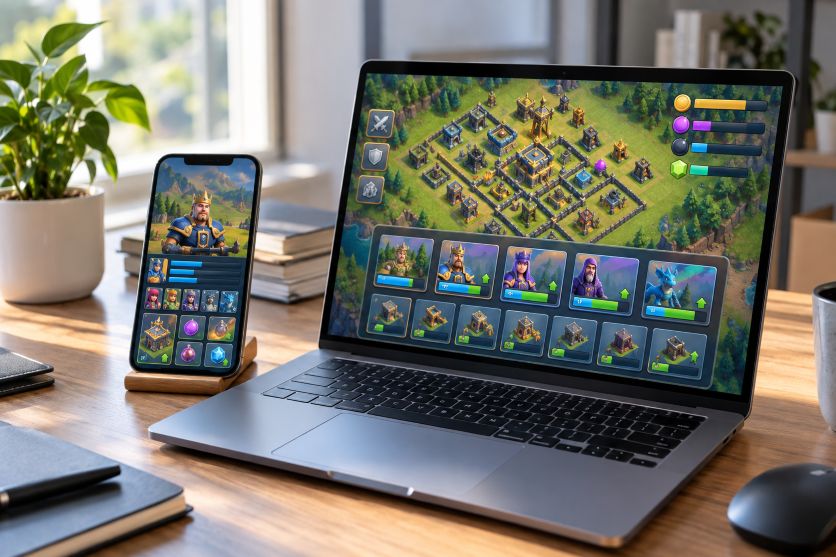
Progression Level Provides the Starting Point
The most visible factor is overall progression. Strategy games commonly place content behind levels, buildings, or other milestones. An account that has reached later stages may therefore represent substantially more accumulated play than one at an earlier stage.
Clash of Clans provides a clear example. Supercell documents how access to major gameplay systems is tied to Town Hall and Hero Hall progression. Heroes become available at different stages, while upgrading the Hero Hall raises the maximum level available to those characters.
Still, reaching a high progression tier does not mean everything underneath it has been developed equally. One player may advance quickly while leaving defenses, characters, or equipment behind. Another may spend much longer completing upgrades before moving forward. That makes the quality of progression more important than the headline level alone.
How Complete Are the Upgrades?
Upgrade depth can create a large difference between apparently similar accounts. Buyers looking at a strategy-game profile may examine defensive structures, offensive units, research progress, storage capacity, and other systems that require time or resources to develop.
This creates a distinction between simply reaching a late-game stage and developing the systems available at that stage. An account with many unfinished upgrades still represents work that a future player would need to complete.
The same principle applies to characters. Supercell explains that Hero Journey progress in Clash of Clans is based on the combined levels of a player’s Heroes. The system also provides progression rewards that include resources, equipment, and cosmetic items. That makes character development another measurable part of an account’s overall progression.
Unlocked Content Can Change Perceived Value
Some content cannot be judged simply by looking at the main account level. Characters, equipment, cosmetics, event rewards, and other unlocks may differ considerably between accounts that otherwise look similar.
Hero Equipment shows how this works. Supercell Support states that equipment can provide Heroes with different abilities. Common and Epic equipment can also be upgraded using several types of Ore. Some Epic Equipment can be obtained through Hero Journey or special events.
As a result, an account’s configuration matters. A developed collection of useful equipment may represent additional progression beyond the visible level of the base. Missing items or underdeveloped equipment may leave more work for whoever uses the account next.
Resources Matter, but Their Importance Varies
Stored resources can affect short-term convenience. A profile with useful upgrade materials may allow progress to continue sooner, while an account with depleted resources may require additional play before major upgrades can begin.
However, resource balances can change quickly. Permanent upgrades and unlocked systems generally provide a clearer picture of long-term progression than a temporary stockpile.
Specialized resources may deserve closer attention because they are tied to specific systems. For example, Supercell identifies Shiny, Glowy, and Starry Ore as resources used for Hero Equipment upgrades. Different equipment levels and rarities require different combinations of these materials.
Why Account History and Security Cannot Be Ignored
Visible progression is only one side of valuation. Account history and access security can materially affect the risks surrounding a third-party transaction.
This is especially important because game publishers may restrict account transfers. Supercell’s Terms of Service state that players must not purchase, sell, rent, or give away accounts. Its Safe and Fair Play policy also warns that transferred accounts may have uncertain status and may remain accessible to a previous holder. These concerns reflect broader shared account security risks seen across gaming and software, where several people using the same credentials can create problems with access, privacy, and account control.
Account protection systems add another layer. Supercell Support says its Account Protection feature uses tools such as SMS verification and recovery codes. Recovery credentials can help establish control when account access is lost. This means an advertised account’s technical configuration may affect practical access, regardless of how impressive its in-game statistics appear.
Platform Rules Can Override Marketplace Pricing
A high asking price does not remove platform restrictions. Marketplace value is determined by what buyers and sellers are willing to accept, while the game publisher controls whether transfers are permitted under its rules.
For Clash of Clans specifically, Supercell says buying, selling, sharing, or giving accounts to another player violates its Terms of Service. The company also warns that it cannot guarantee the security of accounts passed between players and that transferred accounts may face closure.
That distinction is important when interpreting third-party listings. Price can describe how a marketplace values accumulated progression, but it does not establish official ownership rights, transferability, or future access.
Value Is Really a Bundle of Different Factors
There is no single statistic that fully describes a high-level strategy-game account. Progression level provides an easy starting point, but upgrade completeness, character levels, equipment, unlocked content, resources, account history, and access conditions provide much more context.
For anyone studying these marketplaces, the useful lesson is to look beyond the headline level and asking price. Two accounts at the same stage may represent very different amounts of completed progression. Platform rules also remain important because technical access and marketplace pricing do not necessarily mean that an account can be transferred under the publisher’s terms.
As progression-based games continue adding new characters, equipment, resources, and upgrade systems, account comparisons are likely to become more complex. Understanding the underlying software progression provides a clearer way to see why seemingly similar profiles can receive very different valuations.